
The smell of ozone and hot hydraulic fluid is thick in cell four. A veteran operator with twenty-four years under his belt rests a heavy, grease-stained palm on the shoulder of an eighteen-year-old apprentice. He points past the emergency shut-off placard, straight to the manual bypass valve tucked behind the secondary conduit. "Look," the veteran murmurs over the turbine whine, "don't waste ten minutes running the full diagnostic sequence every time pressure drops. Just jump the interlock with the manual toggle. It’s what we’ve always done. Keeps production moving." He isn't malicious. He isn't trying to cut corners for sport. He is transmitting what he honestly believes is the ultimate expression of craft and survival in a relentless system. The apprentice’s neural architecture fires, encoding the shortcut not as a deviation, but as the baseline standard of competence. In that precise millisecond, the Mentor’s Normalized Transmission pathway passes an invisible, latent hazard into the next generation. Neither of them hears the system fracture.
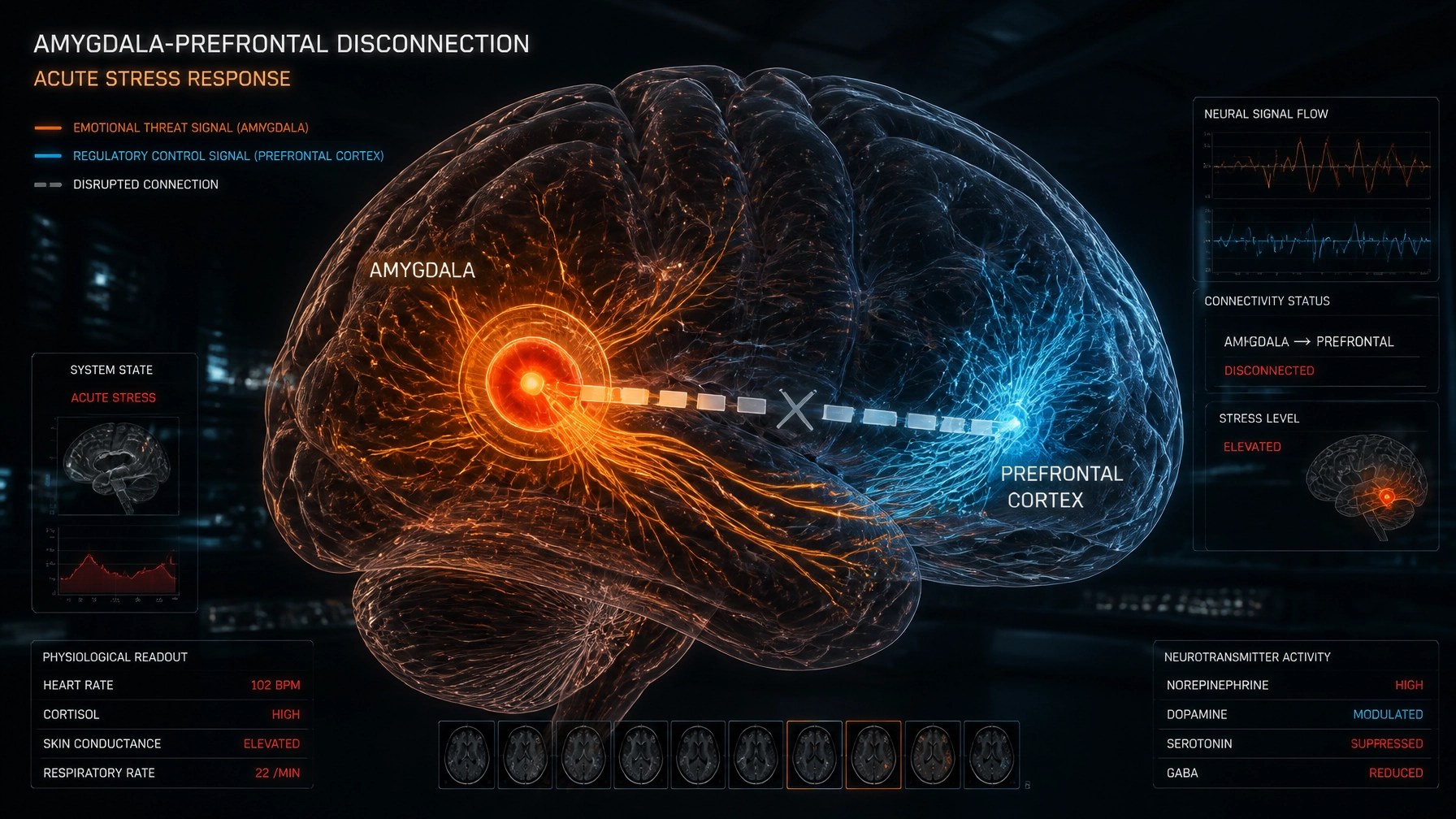
Neural circuitry does not care about your operating manual; it cares about repetition and survival feedback. A 2026 study in Biological Psychology (Serrano, Hrybouski and Malykhin) links higher perceived stress to weaker connectivity between the amygdala and the prefrontal cortex. For twenty-four years, the veteran’s brain ran that manual toggle shortcut without a catastrophic failure. Because the shortcut never triggered an acute explosion, his prefrontal cortex severed the neural link between the action and the hazard signal. The shortcut stopped being perceived as a risk; it became a neurological reflex.
Research on alert fatigue describes a similar pattern: in a 2026 interview study of hospital doctors (Newton and colleagues, Journal of Medical Internet Research), alerts stopped registering once many of them were irrelevant or repetitive. The veteran’s shortcut is an alarm that has been silenced by its own repetition. He believes in the safety of the shortcut with the absolute fervor of a survivor.
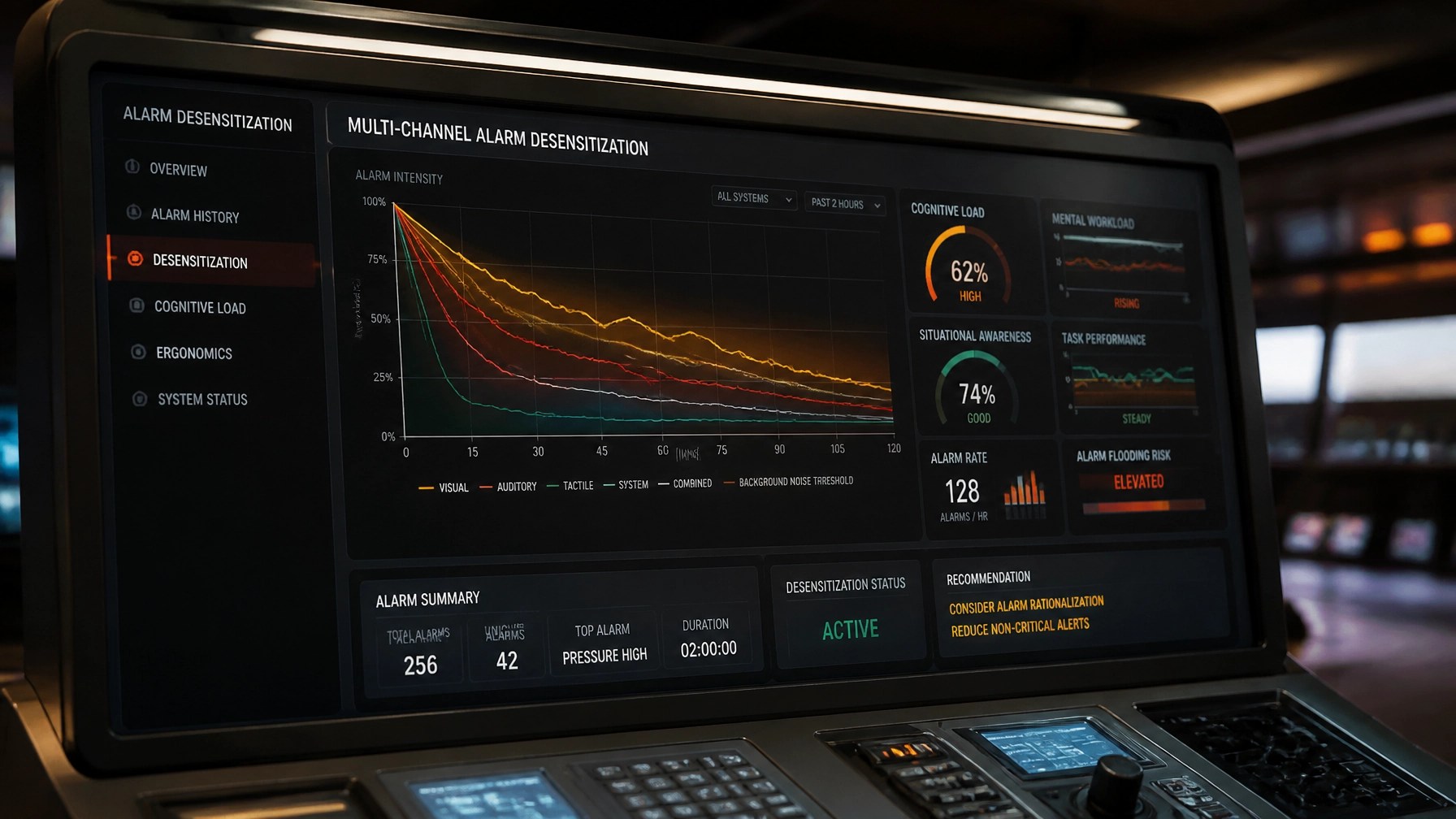
Down the corridor in control room B, a junior engineer stands at the glass partition watching the bypass maneuver. Her nervous system isn't desensitized; it is hyper-reactive. She sees the micro-vibrations in the turbine casing that everyone else dismisses as normal operational hum. She sees the hazard clearly, acutely, undeniably. She tries to speak up during the morning handover, pointing to the telemetry anomalies flashing amber on her workstation. No one looks up from their coffee. The senior shift leads wave her away, citing production quotas and decades of trouble-free operation. The Visionary's Unheard Signal pathway isolates her in plain sight.
Belief always carries a trace of doubt; knowing does not. The Mentor believes the shortcut is safe because his unthreatened history whispers reassurance into his basal ganglia. The Visionary knows the bypass is a disaster waiting for a specific confluence of ambient heat and load spikes, but knowingness without institutional rank carries zero currency. The organization listens exclusively to the Mentor because his belief is amplified by tenure, whereas the Visionary’s truth is treated as an inconvenience.

Field Note: The Transmission Audit
This protocol requires zero theory and immediate execution on your operational floor:
- Map the Unwritten Curriculum: Walk your floor for two hours this week and document every single procedure, workaround, or shortcut that veterans teach newcomers which does not appear in your official standard operating procedures.
- Isolate the Transmissions: Treat each unwritten habit as a biological transmission from the Mentor archetype.
- Classify by Neural Feedback: Label each transmitted shortcut as either Protected by Frequency (routinely performed without immediate negative feedback) or Structurally Exposed (relying entirely on human vigilance rather than mechanical interlocks).
- Intervene at the Source: Redesign the physical interface or workflow so that the official procedure requires less cognitive energy than the transmitted shortcut, breaking the Normalized Transmission loop before it reaches the next generation.
If the Mentor is transmitting the shortcut that will become the next generation's standard, and the Visionary who sees the hazard is being ignored : which voice is your system designed to hear, and what is the cost of the one you're not listening to?
Scenes in this article are illustrative composites, not accounts of specific events.