
He knew the exact timber-shudder of the number four stamping press before it ever faulted. He knew the specific chemical musk of the degreasing solvent when the ventilation blower was beginning to choke on its own bearings. For twenty-two years, Marcus walked that concrete floor twice a shift, his boots chewing up the grit, his eyes scanning the blind corners where the fork trucks clipped the yellow striping. He knew the names of the operators' kids, the slack in their shoulders when fatigue set in at 3:00 a.m., the precise cadence of a crew that was rushing to meet quota. Then the executive team bought the enterprise intelligence suite, and a thirty-two-inch curved monitor appeared on his desk.
The screen was a masterpiece of modern data architecture. It pulsed with real-time risk scores, color-coded heat maps, automated compliance tickers, and predictive incident probability curves calculated down to the decimal point. At first, Marcus checked the dashboard after his walks, comparing what his eyes and nose told him against what the algorithms predicted. But the algorithms were fast, and the walk took forty-five minutes of aching knees and damp air. The dashboard was right there, humming quietly, perpetually reassuring him with crisp, emerald-green indicators. The walks got shorter. Ten minutes. Five minutes. Then the morning briefings took over, the spreadsheets piled up, and Marcus stopped leaving his office entirely. The screen said everything was green. The manager stopped walking the floor. The floor didn't stop having hazards. The manager just stopped seeing them.
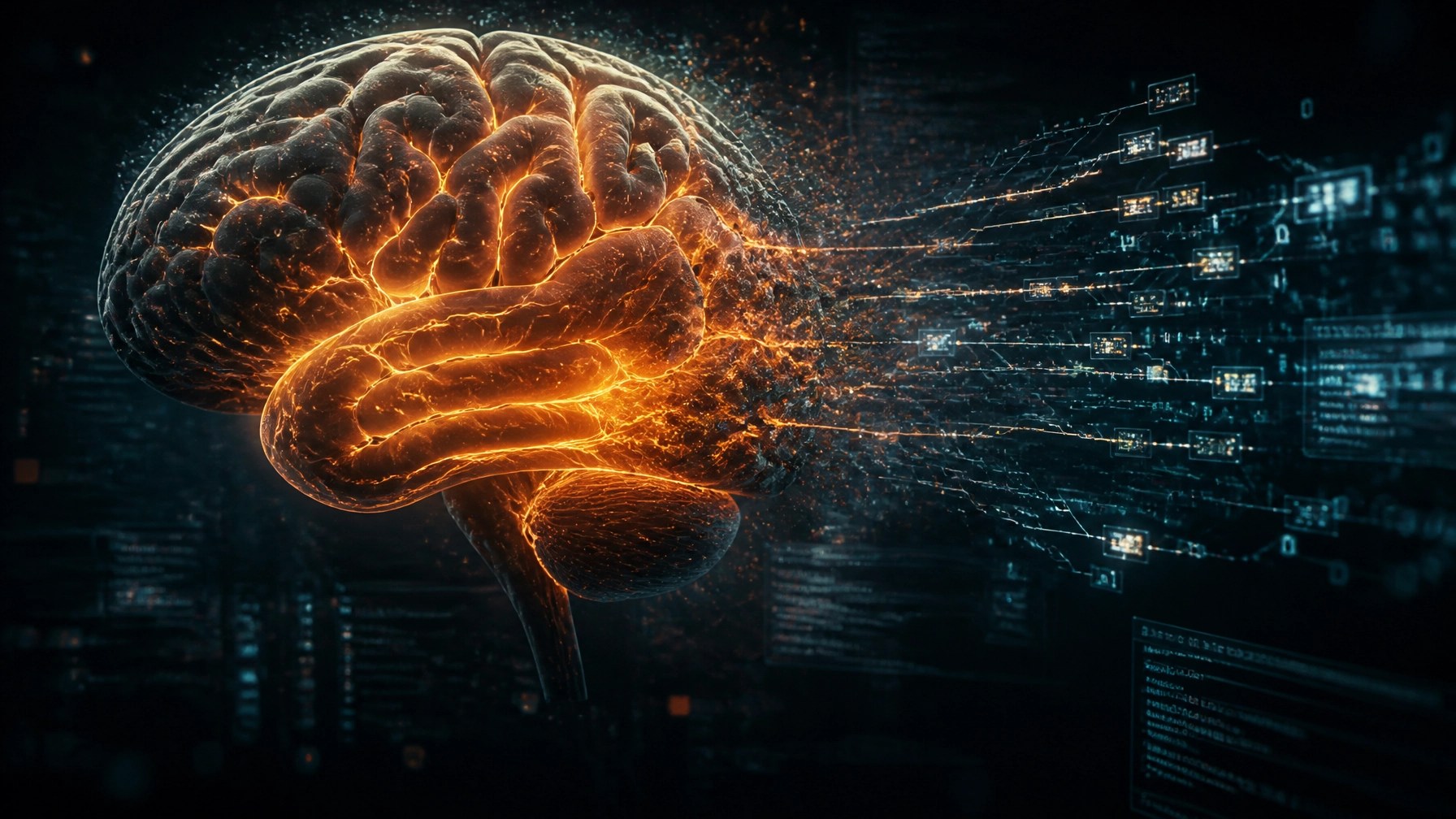
Neural atrophy is a quiet, bloodless process. When an organism stops exercising a survival circuit, the neural architecture dedicated to that surveillance begins to prune itself back, reallocating metabolic energy to whatever input dominates the environment. Human-factors researchers have long documented this cognitive trap (Parasuraman and Manzey, 2010), identifying automation complacency as one of the most insidious threats to organizational reliability: the trained professional abandons their own evolved pattern recognition because a glowing interface presents a conflicting, higher-status narrative. The brain rewires its valuation pathways, deferring executive control to the algorithm.
The mechanics of this surrender are not mysterious. When you anchor your situational awareness to an external screen rather than somatic threat detection, the prefrontal cortex stops integrating visceral sensory cues from the environment. The dashboard becomes the ultimate authority, and your biological warning systems go dark from disuse. You are no longer reading the room; you are reading a translation of the room filtered through someone else’s code.
When you steady your mind and your thoughts, you steady your emotions and the state you broadcast into your environment. The safety leader who outsources attention to a dashboard is no longer broadcasting sovereign awareness into the workplace. They have become a receiver, tuned passively to a machine frequency that mistakes the absence of recorded incidents for the presence of safety.
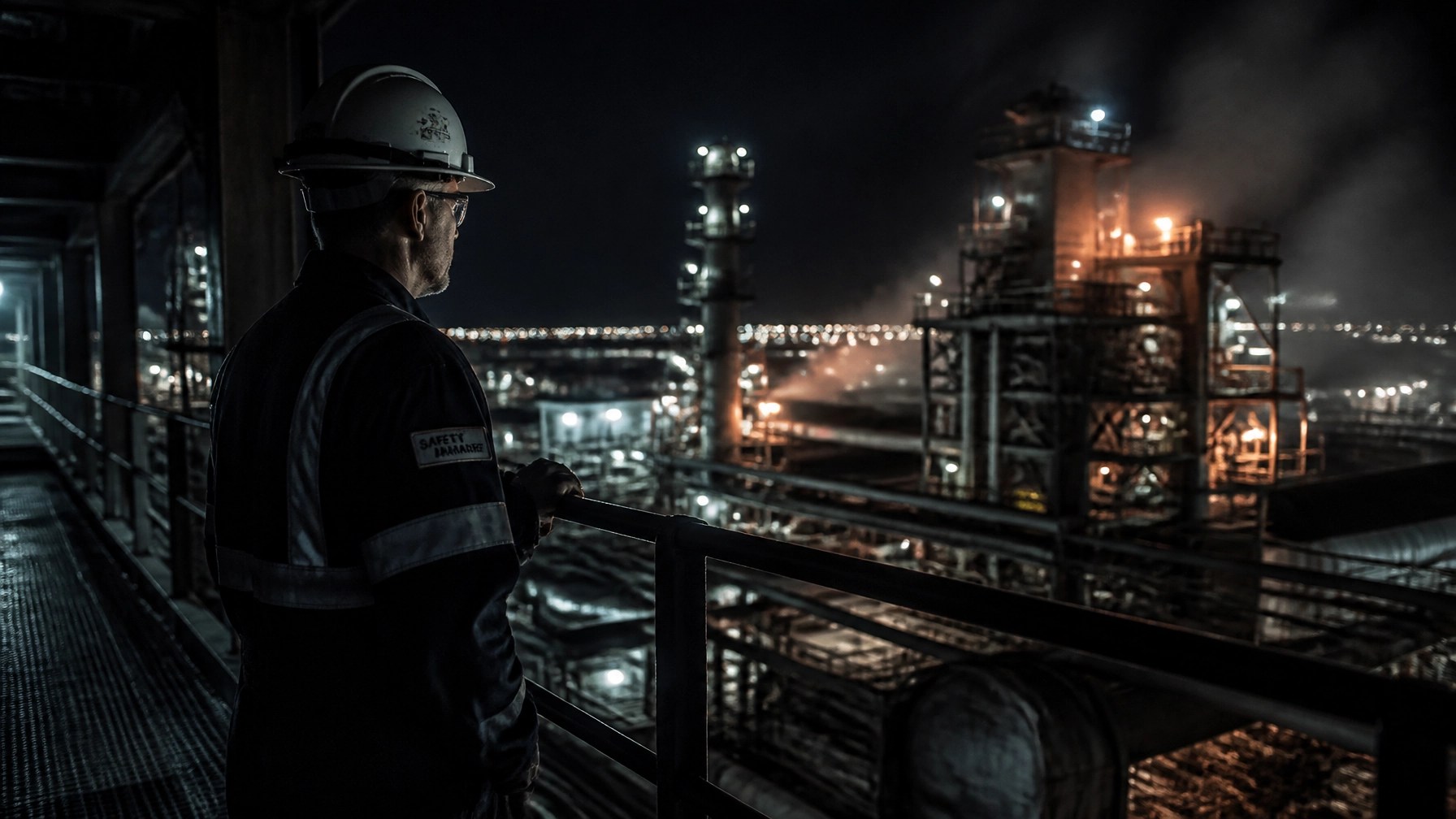
The machinery does not care about your database. It vibrates, it wears down, it corrodes in the dark corners where the automated optical sensors cannot see past a pillar of stacked pallets. When Marcus finally walked the floor again after a near-miss on line two: an incident the dashboard had rated a benign tier-one anomaly: he found a hydraulic line weeping oil directly onto a hot electrical conduit. The sensors hadn't flagged it because the pressure differential hadn't breached the algorithmic threshold. The human eye caught it because of a faint, iridescent sheen on the concrete and the smell of toasted rubber that no camera can ingest. The screen had told him the system was pristine. Reality was four minutes away from a catastrophic arc flash.
The illusion of total visibility is the most dangerous hazard ever introduced into industrial safety. It seduces leaders into believing that data density equals operational control. But data is an abstraction, a trailing shadow of physical reality cast onto glass. When you stop touching the steel, listening to the hum of the motors, and reading the micro-expressions of exhausted operators, you aren't managing risk. You are managing an illusion, living inside a digital echo chamber where every green pixel whispers that you are safe until the moment the metal screams.
Field Note: The Dashboard Detox Protocol
- Mandatory Screen-Free Shift: Schedule one full shift per week where your desk monitor, tablet, and phone apps remain powered down. Zero dashboard access. No risk scores. No predictive analytics tickers.
- Sensory Reclamation: Walk your facility using only your biological instruments. Listen for the subtle acoustic changes in rotating equipment. Smell the air for chemical drift or electrical overheating. Watch the physical posture and eye movements of the operators on the line.
- Friction Logging: Immediately after the walk, write down three operational hazards or latent conditions your physical senses detected that your software suite never flagged. Rebuild your trust in somatic pattern recognition before the neural pathways atrophy completely.
If the dashboard has made you stop walking the floor, what is the cost of the hazards you stopped seeing : and who is paying for the gap between the green screen and the reality of the work?
Scenes in this article are illustrative composites, not accounts of specific events.