
The heavy casing of the secondary valve hums with a low, hydraulic vibration that vibrates straight up through the steel grating into the soles of Marcus's work boots. His gloved hand rests on the latch. Two meters away, the printed operations manual sits clipped to a bulkhead bracket, its plastic-coated pages detailing a twelve-step depressurization sequence that will stretch a routine maintenance window by forty-five minutes. Ten meters in the opposite direction lies the shortcut: a quick bypass rotation that has been executed three thousand times across the history of this shift without a single spark or hitch. Right now, before the muscle fibers in his forearm tighten to execute either trajectory, the situation exists in a profound state of pure potential. Multiple possible futures shimmer in the abstract space of the facility, all equally real, all carrying divergent physical consequences.
Marcus makes his choice. His fingers snap the bypass latch with practiced efficiency.
In that microsecond of kinetic commitment, the other futures instantly vanish. The alternate reality where the pressure differential vented safely through the secondary line ceases to exist. The momentum is locked into hardened steel and rushing fluid. The decision is irreversible, etching its outcome into the physical architecture of the plant and the fragile biology of everyone standing within the blast radius. His single act of selection has violently collapsed the wavefunction of the physical environment into one solitary, unalterable reality.
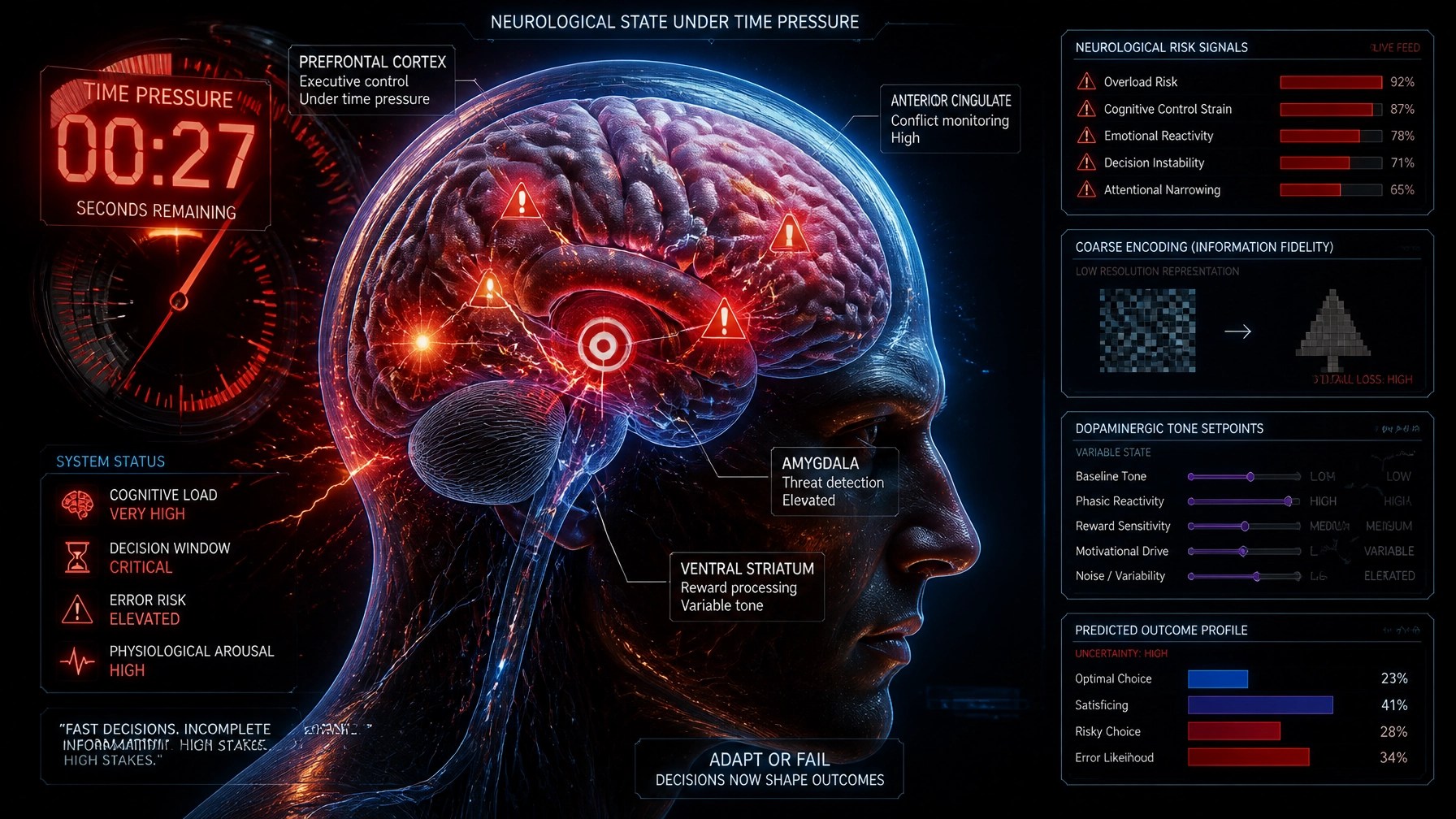
What occurred on the catwalk is not merely a behavioral choice; it is an active physical measurement under the fourth principle of the Quantum Safety™ framework. When an operator stands before a high-consequence junction, their brain is navigating a brutal torrent of biological and systemic pressure. Acute urgency coarsens how risk is weighed, pushing people from careful probabilistic reasoning toward blunt yes-or-no calls, and people differ in how much stimulation they seek. Some operators are biologically wired to find comfort in high-entropy shortcuts, while others stall out in paralyzing hesitation when options multiply.
The worker who reaches for the bypass valve is operating under conditions engineered by the system itself. When you can steady your mind and your thoughts, you steady the state you broadcast. Yet, an industrial environment that fails to train its operators to recognize the exact moment of decision as a quantum collapse leaves human biology entirely exposed to environmental triggers. When the system dictates relentless pace and tight deadlines, it sets the boundary conditions that predetermine which reality will ultimately collapse. Without an intentional interruption, the path of least resistance becomes the only path physically available to the nervous system.

The collapsed wavefunction leaves no room for retroactive negotiation. Once the valve turns, the kinetic energy is released, and the molecules execute their chemical destiny regardless of corporate post-incident reviews or safety committee meetings. The illusion that safety is managed after the fact ignores the fundamental mechanics of measurement. Every procedure, every shortcut, and every unexamined habit is an act of observation that forces nature's hand. If the organizational design leaves the worker alone with their baseline dopaminergic setpoints and acute time pressure, the collapse will always favor speed over sustainability.
Intervening in this quantum sequence requires disrupting the automatic descent from potential into permanence. Operations must be structured to honor the weight of the observation point.
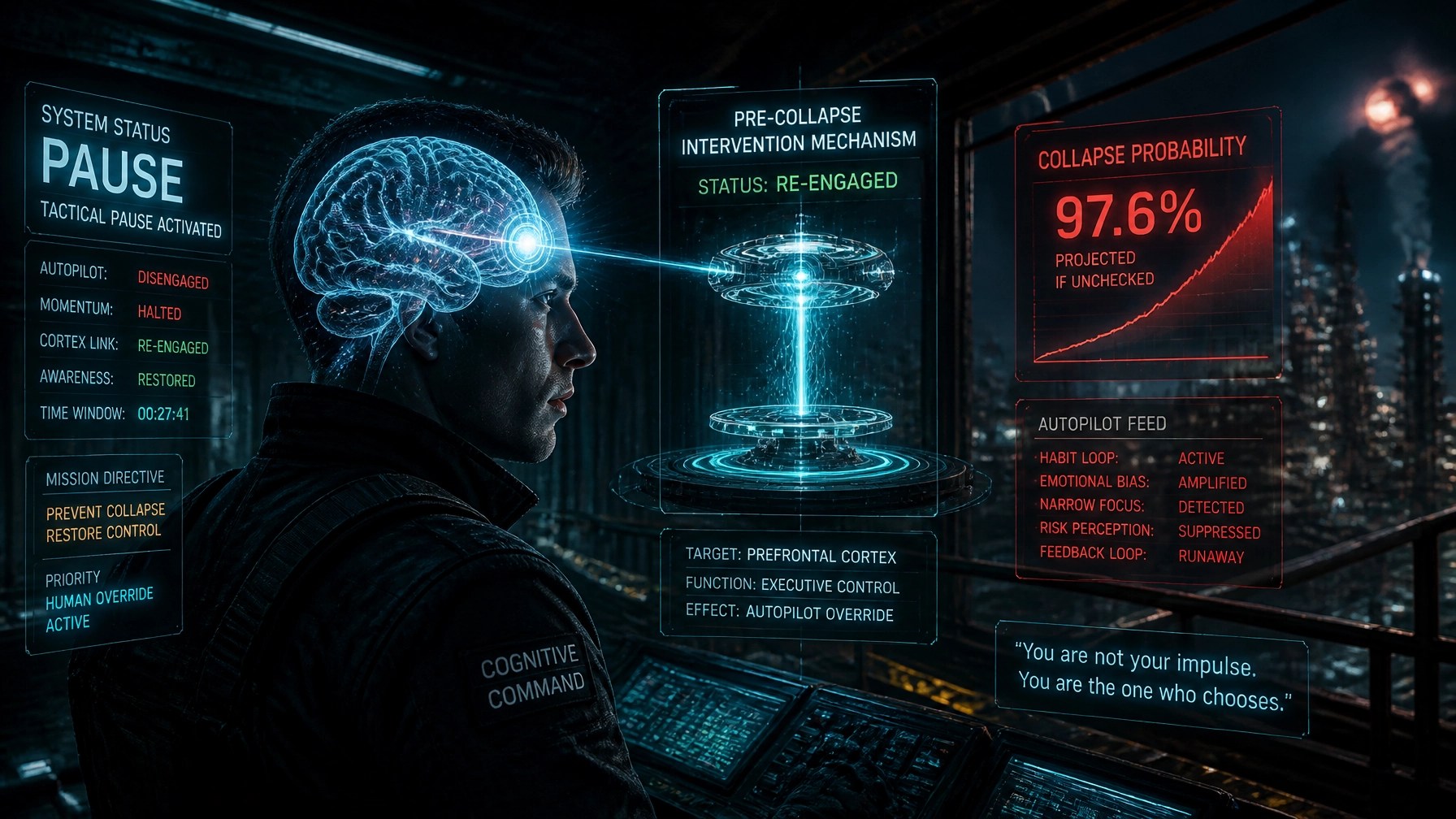
Field Note: The Pre-Collapse Intervention Protocol
- Map the Junctions: Catalog every high-consequence decision point across your operational footprint where shortcuts or bypassing procedures yield immediate time savings against latent physical risk.
- Enforce the Pre-Collapse Pause: Implement a mandatory, non-negotiable operational standstill immediately prior to critical valve turns, heavy lifts, or line breaks.
- Interrupt Autopilot Momentum: Require the worker to physically step back from the control point for ten seconds, forcing metabolic arousal down and allowing the prefrontal cortex to re-engage with probabilistic reality before the measurement is made.
- Audit Systemic Triggers: Review scheduling metrics and production quotas to ensure that time pressure is not artificially driving coarse risk encoding across your frontline teams.
If every decision collapses a set of possible futures into one irreversible reality, what is the cost of the decisions you are not creating a pause before : and who pays for the futures that are collapsed before anyone has a chance to assess them?
Scenes in this article are illustrative composites, not accounts of specific events.