
The air in the mahogany-paneled conference room smelled faintly of stale espresso and corporate victory. Up on the sleek 85-inch display, a brilliant emerald-green curve plunged downward, accompanied by a bold, unblinking percentage sign: a forty percent reduction in incident rates since the predictive analytics platform went live six months ago. The vendor stood by the podium, his smile polished to a high sheen, gesturing smoothly at the regression lines as if he had personally rewritten the laws of probability. Around the mahogany table, executives nodded in quiet awe and the safety director beamed, basking in the sudden warmth of validated foresight. Nobody asked about the control group because nobody knew there wasn't one. Nobody asked whether the drop was the Hawthorne effect breathing down the necks of terrified foremen, a natural regression to the mean after an anomalous spike, or simply a shift in reporting thresholds where near-misses quietly stopped being written down to protect the metric. The vendor didn't volunteer the nuance. The room didn't have the stomach for it. They saw the green line, they heard the four-zero, and they bought the narrative hook, line, and sinker.
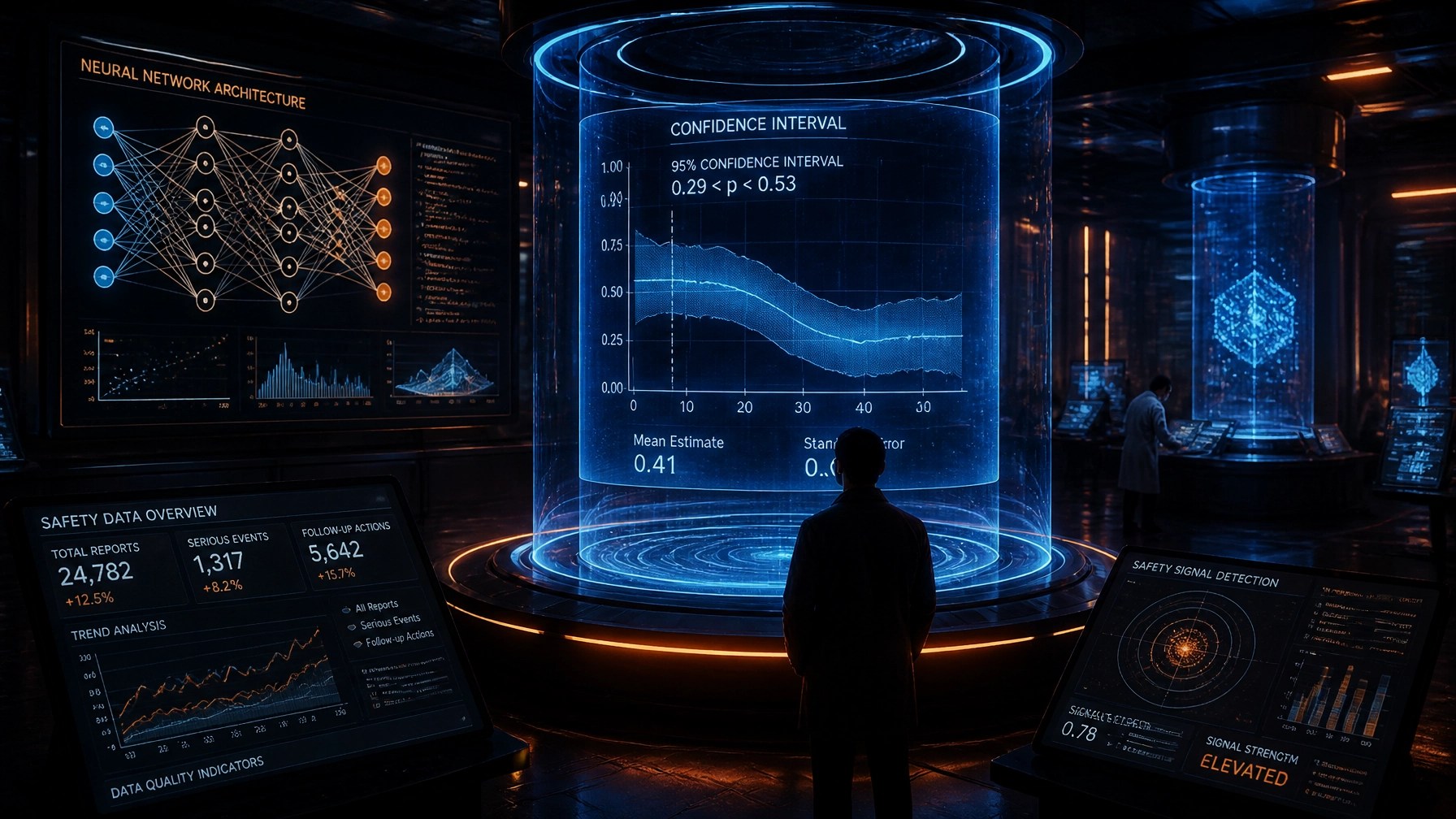
A 2025 systematic review (Jetha and colleagues, Systematic Reviews) cuts through that polished boardroom theater with the chilling coldness of an autopsy table. It screened 1,255 articles for evidence that AI safety tools reduce worker injury or illness and found only two eligible studies, an uncomfortable truth that software brochures conveniently omit. While the models show breathtaking technical feasibility in recognizing patterns, flagging anomalies, and tracking exposure vectors in controlled environments, the empirical evidence base tracking sustained, real-world injury reduction at scale remains remarkably thin and uneven. The reviewers concluded it is premature to recommend widespread use. The technical capability to predict has sprinted light-years ahead of the controlled, longitudinal proof that those predictions actually keep workers safe in the mud, dust, and vibration of the real world.
Belief always carries a trace of doubt; knowing does not. The software vendor standing at that podium believes in their algorithm with the unshakeable fervor of a true believer, exactly because their livelihood depends on maintaining that untested certainty. True knowingness, however, demands rigor, controlled baselines, and the courage to look at a forty percent drop and ask what invisible machinery manufactured the illusion. When you build safety programs on top of belief rather than verifiable structural mechanics, you aren’t engineering protection; you are buying an expensive talisman.
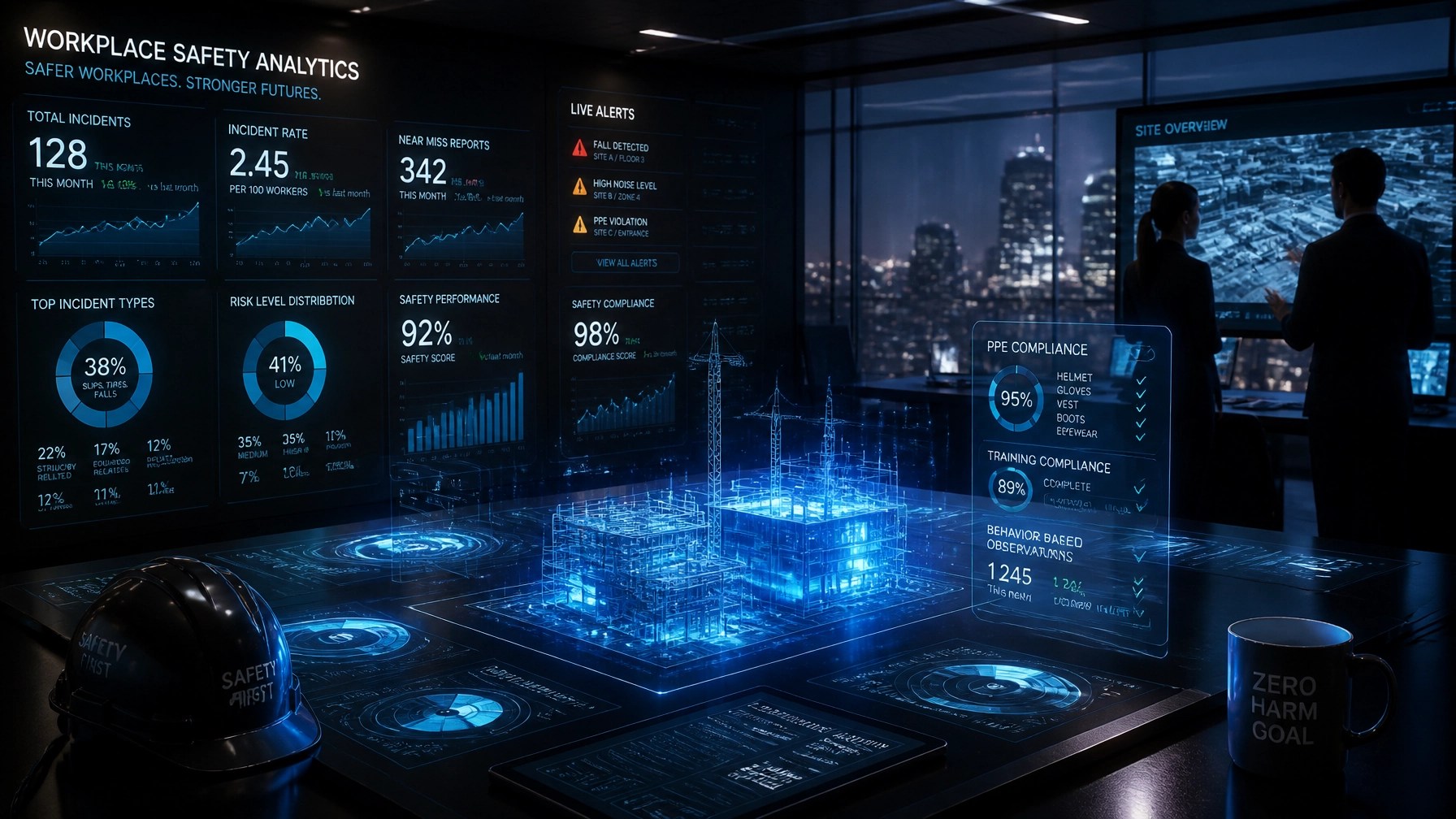
That gap between technical dazzle and field-proven outcome is where safety leadership goes to die. In multi-million-dollar facilities across the globe, teams are deploying complex neural networks without verifying whether their baseline data is even clean. They watch dashboards pulse with probabilistic heat maps while ignoring the fundamental reality that an algorithm trained on underreported incidents will simply automate and scale institutional dishonesty with a shiny digital veneer. The 2025 review’s data forces us to stop hiding behind software demos and confront the mechanical reality of our metrics. If a tool cannot prove its efficacy against a rigorous control group, it is not an intervention. It is an aesthetic upgrade for a broken status quo.
Field Note: The Vendor Evidence Checklist
Before you sign another software contract or approve a pilot program that promises algorithmic salvation, force the vendor to answer four non-negotiable questions:
- Training Data Provenance: Where did the training dataset originate, how large was the sample, and what specific validation taxonomies were applied to weed out historical reporting bias?
- Holdout Dataset Validation: What are the model's out-of-sample accuracy, precision, and recall metrics when tested against a rigorous, independent holdout dataset rather than their own curated marketing benchmarks?
- False Positive and False Negative Ratios: How does the system handle alarm fatigue, and what are the documented rates of false negatives that could leave critical physical hazards invisible to the crew?
- Longitudinal Trend Verification: Can the vendor provide an independent customer reference willing to share raw, pre- and post-implementation injury trend data over a minimum twenty-four-month window, free of testimonial gloss?
If they hesitate on any of these four points, close the laptop. The evidence gap is still wide open, and your people deserve better than an expensive guess dressed up in an interface.
If the evidence that AI reduces injuries at scale is still being built, study by study, site by site : are you piloting with methodological rigor, or are you declaring victory because the vendor's renewal invoice says you should?
Scenes in this article are illustrative composites, not accounts of specific events.